
Glycemic Index
At the Helm

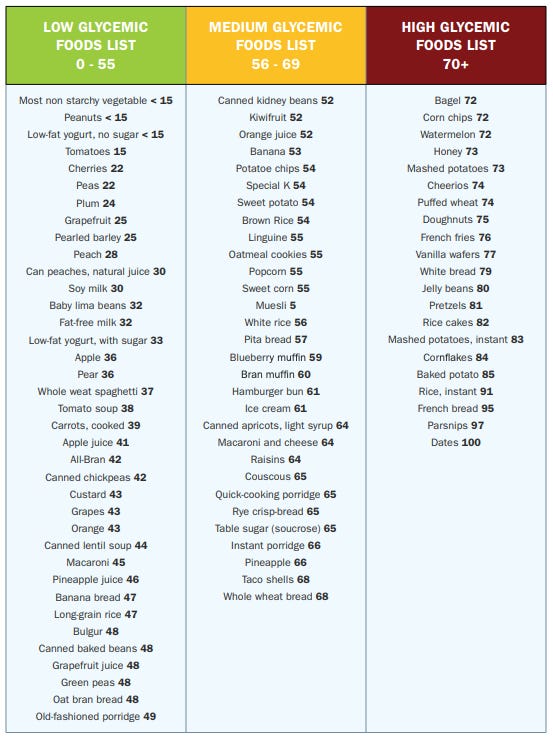
The Glycemic Index (GI) is the ranking of foods on a scale of 1-100 based on how much they raise blood sugar levels after eating.
So why does this matter?
The higher a food is on the GI scale, the larger the blood sugar spike in your body. Larger blood sugar spikes lead to higher insulin levels. High insulin levels cause our cells to take in more sugar than they need and ultimately store the excess as fat. To make matters worse, after the cells take in the sugars, your body signals a hormonal response to indicate hunger, which leads to overeating.
This is of course an oversimplification, and other variables play a role in these processes, but it’s good to understand the fundamentals of how different foods can affect the hormones in your body.
Practical Advice:
Be mindful not just of the Glycemic Index of the foods you eat, but how much of it you’re eating. Once you start to understand how these foods affect your hunger levels and body fat storage, you can make more conscious decisions of what you eat.
Here’s a chart outlining the Glycemic Index of popular foods:
Love the chart!